

A few years ago, Mira did not recognize her own hunger anymore. She worked remotely for a global company, juggling time zones and expectations. Breakfast disappeared first. Lunch became coffee. Dinner arrived late and heavy. Sleep felt thin. Her body ached quietly, and her mind stayed loud.
Nothing dramatic happened. No sudden illness. Just a slow imbalance.
Mira’s story is not unusual. Across cultures and continents, stress has quietly changed how people eat—and how food supports, or fails to support, mental health and overall wellness.
This article explores stress and nutrition balance tips through real-life experiences, global research, and gentle, practical routines. Not as rules. Not as pressure. But as a way back to a calmer relationship with food and self.
Modern stress rarely looks like danger. Instead, it looks like deadlines, notifications, uncertainty, and constant comparison.
Over time, chronic stress alters appetite, digestion, and nutrient absorption. Global public health data shared by the World Health Organization consistently links prolonged stress to rising lifestyle-related health challenges, including metabolic imbalance and mental fatigue.
At the same time, food systems have changed. Ultra-processed meals are cheap, fast, and emotionally comforting—yet often leave the body undernourished.
For many people, stress and nutrition are now locked in a loop:
Breaking this loop does not require perfection. It requires awareness, patience, and balance.
Stress affects more than mood. It changes biology.
According to research summarized by Harvard Health Publishing, stress hormones like cortisol influence blood sugar regulation, fat storage, and cravings. This is why stressed people often reach for quick carbohydrates or salty foods.
However, the issue is not willpower. It is physiology.
When the nervous system stays in “alert mode”:
Over time, even a “normal” diet may fail to meet the body’s needs. This insight is central to holistic health and wellness, where nutrition and mental health are viewed as interconnected, not separate systems.
Mira did not change everything at once. She noticed one small pattern: on days she skipped real meals, her anxiety spiked by evening.
With guidance from a nutrition educator, she began a simple practice—eating one balanced meal earlier in the day. No restrictions. No supplements. Just consistency.
Within weeks, she reported:
This aligns with observations shared by clinicians at the Cleveland Clinic, who emphasize meal timing and nutrient density as foundational tools for stress regulation.
This is not about superfoods or trends. It is about everyday nourishment.
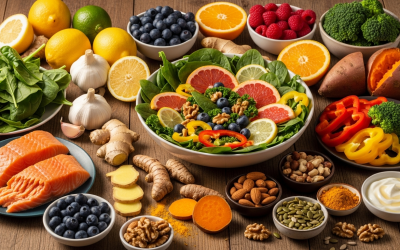
Research discussed by the National Institutes of Health suggests several nutrient groups play a supportive role in stress response:
Many of these nutrients already appear in traditional diets worldwide. The challenge is not access—it is regularity.
For deeper context, you may find helpful insights in TheGangchil’s reflection on holistic wellness and daily nourishment.
Mindful eating often sounds intimidating. In reality, it can be very simple.
For many people, stress eating happens without awareness. Meals are eaten while scrolling, working, or worrying. The body receives calories but not presence.
According to guidance shared by the Mayo Clinic, eating with minimal distraction improves digestion and satiety signals.
A gentle starting point:
This small pause can restore trust between body and food—an essential part of mental health and sustainable healthy life practices.
In Japan, long work hours have been linked to irregular eating.
In Europe, stress-related digestive complaints have risen among office workers.
In South Asia, urban families increasingly rely on packaged meals due to time pressure.
Despite cultural differences, nutrition researchers observing global trends through WHO-supported studies note a shared issue: stress disrupts traditional eating rhythms everywhere.
Communities that maintain shared meals—even simple ones—often report better emotional well-being. This highlights the social dimension of food, often overlooked in modern nutrition advice.
Extreme diets increase stress.
Rigid rules create guilt.
A balanced approach focuses on addition, not subtraction:
This philosophy echoes guidance from the Centers for Disease Control and Prevention, which emphasizes sustainable habits over short-term fixes.
For readers exploring this approach, TheGangchil’s article on real food and sustainable eating habits offers complementary insights.
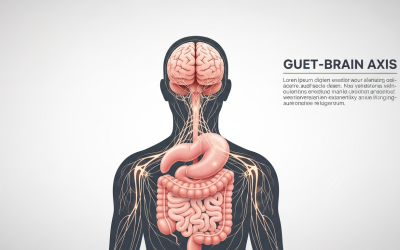
The gut and brain communicate constantly. Stress disrupts this conversation.
Emerging research referenced in PubMed-reviewed studies suggests that gut health influences emotional regulation through neurotransmitter pathways.
This does not mean chasing probiotics.
It means supporting gut-friendly routines:
Many people notice improved clarity and calmer moods simply by respecting digestive rhythms. This is a quiet but powerful health and fitness insight.
Instead of rigid plans, consider gentle anchors:
These routines align with eco-conscious and eco friendly lifestyle principles by encouraging whole, minimally processed foods.
You may also explore TheGangchil’s guide on daily wellness routines for busy lives for practical alignment.
The future of nutrition is not about trends. It is about resilience.
Public health experts increasingly recognize food as emotional infrastructure—supporting stress tolerance, focus, and long-term well-being. Universities studying lifestyle medicine now integrate nutrition and mental health education together, not separately.
As global stress levels rise, balanced nourishment may become one of the most accessible mental wellness tools available.
Mira still feels stress. Her life is still busy. But she eats with more respect now.
Not perfectly. Just intentionally.
Balancing stress and nutrition is not a destination. It is a relationship—one meal, one breath, one choice at a time.
If stress has quietly changed how you eat, begin gently. Choose one meal to care for yourself today. That is enough.
Does stress really affect nutrient absorption?
Research suggests chronic stress can influence digestion and absorption for many people.
Can balanced nutrition reduce daily stress feelings?
For many individuals, steady meals support more stable energy and mood.
Is emotional eating always unhealthy?
Not necessarily. Awareness matters more than judgment.
Do supplements replace balanced meals?
Most experts emphasize food-first approaches when possible.
| All content is research based and written by a verified expert in holistic health, mindful living, and sustainable wellness communication. |
Posted 8:46 pm | Friday, 09 January 2026
| nm